


It's no secret that Missouri and Illinois have many pesky critters! These include nasty mosquitoes, black widow and brown recluse spiders, chiggers, the venomous snakes - copperhead, cottonmouth and timber rattlesnake, stingers like hornets, yellow jackets and wasps (bees are our friends), fire ants, and rarely a black bear, cougar or wolf, but maybe the worst of all -- the TICK! Ticks are blood-sucking parasites related to spiders and mites. They are arachnids, not insects. Missouri and Illinois have a few varieties such as the Lone Star, American Dog, Brown Dog, and Blacklegged (Deer) Ticks. Adults range from 1/4 to 3/8 inch in size and the newly hatched are known as seed ticks and can be as tiny as a pencil 'dot.'

Many ticks carry and transfer different types of diseases. Lyme or lyme-like disease is one many have heard about, but other tick-borne diseases are Rocky Mountain Spotted Fever, Ehrlichiosis, Tularemia, Heartland Virus, Bourbon Virus, Southern Tick-associated rash illness, Alpha-gal Syndrome (red-meat allergy) and a newly identified disease in 2023 known as Babesiosis. Anytime temperatures are above freezing (March through November) is an active 'season' for ticks, especially in tall grasses, leaf litter and wooded places, but your own backyard can be a haven as well. As a matter of fact, nearly 75% of reported Lyme disease cases, are from bites that occurred in people's own yards.
Before heading outdoors to geocache, hike or picnic, weigh the odds of being exposed to ticks and take precautions to minimize the potential of getting bit by these disease-carrying pests. Especially when going in wooded or tall grass areas, the appropriate attire to avoid tick bites includes long pants tucked into socks, a long-sleeved shirt tucked into pants, and the use of light colored clothing (so crawling ticks are more visible), however it's reported that dark clothing seem to attract less ticks, so maybe khakis is the answer. Tick repellents are a very good idea too. While there are products, like Permethrin, that work well on clothing (do not use on skin), there are also several DIY remedies worth trying. Ticks hate the smell of lemon, orange, cinnamon, lavender, peppermint and rose geranium, so it's likely they'll avoid latching on to items with these smells. Making a spray of any combination of those added to almond oil and rubbed on exposed skin have been helpful. It's also reported that consuming apple cider vinegar or mixing it with water as a spray can also be a natural repellent. It seems a diet of garlic, onion, tuna, sunflower seeds, tomatoes, asparagus, leafy greens etc, can alter blood chemistry enough that ticks don't 'appreciate' it and may not bite. They do however seem to be attracted more to women than men, and Type A blood more than O and AB, with their least favorite being Type B. Also, stay away from products containing musk oil as ticks are attracted to that. Basically forego any perfumes while enjoying the outdoors.
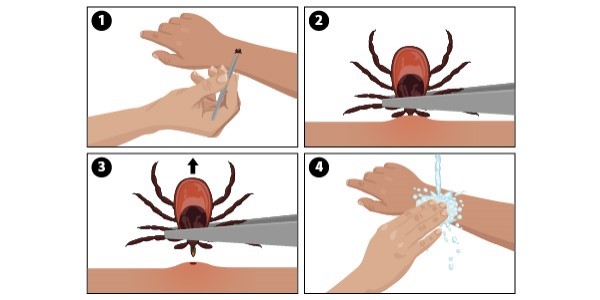
After enjoying time in tick territory, put your clothes in a plastic bag and run a HOT cycle in your dryer before washing them. This usually kills any that may be on your clothing and shoes. Obviously and immediately DO A TICK CHECK! A tick bite cannot be felt, so spotting or feeling the tick crawling or touching it with fingers while checking your body, is the only way to know if you have a tick. Showering after hiking can assist in washing off unattached ticks, but carefully looking and feeling all over your body for ticks is essential and necessary. Removing a tick quickly and properly helps minimize the potential for tick-borne disease spread. If a tick is attached several hours or a day, or if a rash develops or flu-like symptoms, a medical provider should be contacted immediately. Be sure to keep tweezers or a tick-tool (tickease) handy and learn how to properly remove ticks. In general, to remove a tick, use clean, fine-tipped tweezers to grasp the tick as close to the skin's surface as possible. Pull upward with steady, even pressure. Don't twist or jerk the tick; this can cause the mouth-parts to break off and remain in the skin. If this happens, remove the mouth-parts with tweezers. Searching online for the best way to remove at tick, based on the tick's location and size is also recommended. Always thoroughly cleanse the area where the tick was removed. It's advisable to save the removed tick in double ziploc bags and label it with the date, outdoor location and place removed from body just in case a rash or illness develops. This way, the tick can be taken to your local Health Department to test for diseases if the doctor deems necessary.
While the existence of ticks can seem at least a nuisance and at best a bit scary, they are actually essential to our ecosystem, and a strong and important link in the food chain. They are the favorite food for chickens, turkeys, and other ground birds like grouse, as well as predators like ants, spiders and other birds ocasionally. They take nourishment from larger host animals high in the food chain and transfer that down to lesser organisms. The population of ticks can tell scientists how the ecosystem is doing in general. Ticks take part in providing the diversity of life on our planet, since they carry various microorganisms and bacteria. And ticks help keep the animal populations in check. So geocachers, don't let concerns about ticks or any other pesky critters spoil the joy of a good hunt for an ammo can in the woods. Just take time to learn a bit about them, take precautions in attire and repellents before heading outside, and know what to do if an encounter happens.